
PSLE · Primary School Leaving Examination
PSLE Math Tuition in Singapore
Targeted PSLE Math coaching that turns problem sums from a weakness into a strength — built around the AL scoring system.
Fees: $55–$75 a lesson by term, or $60–$80 monthly. All fees
- Teacher to students, at most
- 1:8
- Centres teaching PSLE Math
- 18
- Students improved
- 99%
- Top grades (AL1, A1 or 90%+)
- 55
- Of teaching method
- 20+ years
- Centres islandwide
- 19
PSLE Math tuition at Acer Academy
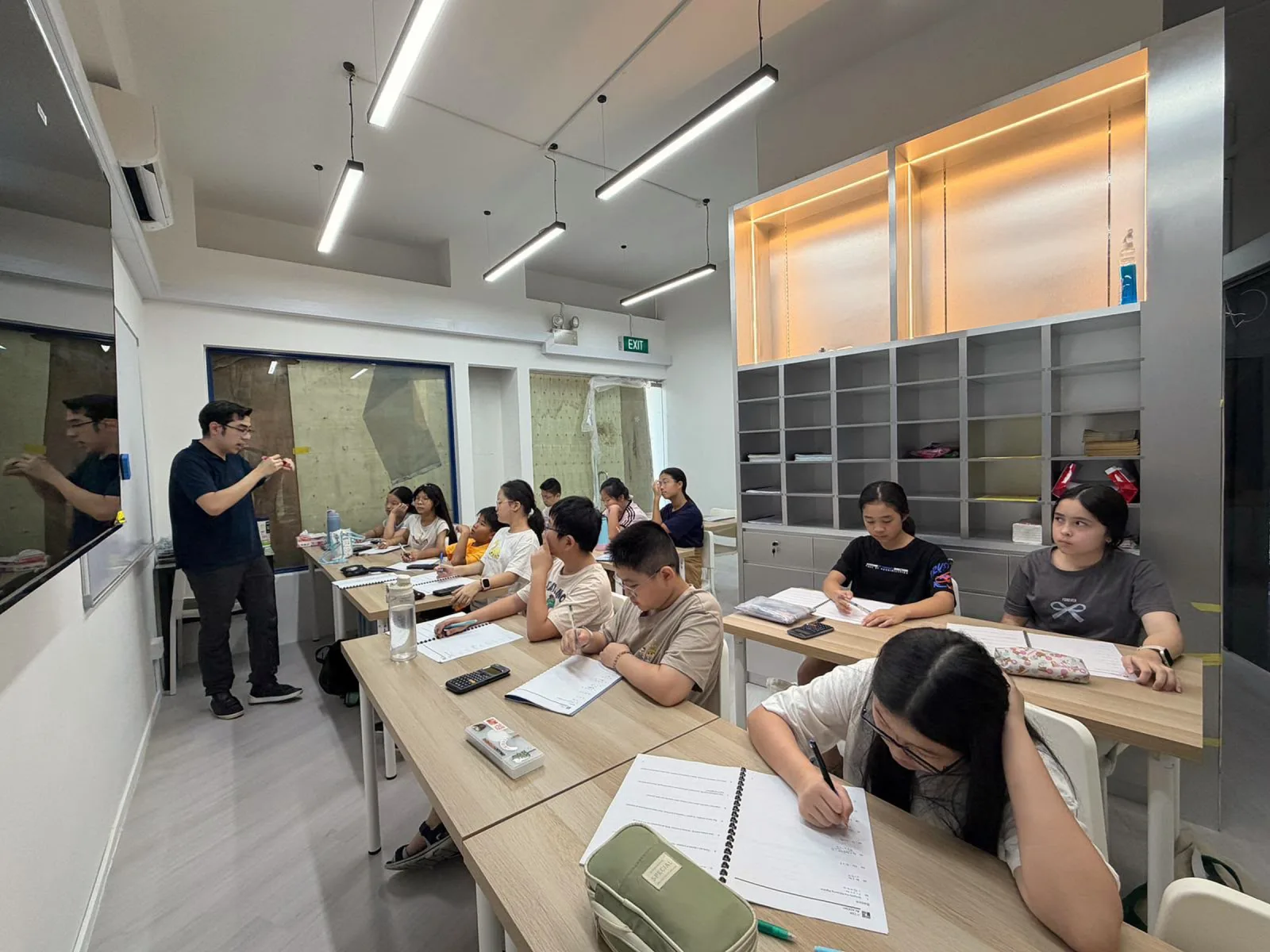
Acer Academy's PSLE Math tuition prepares Primary 1 to 6 students for the PSLE Mathematics paper through small-group classes with at most eight students per teacher. Lessons drill the model (bar) method, heuristics and multi-step problem sums that decide AL bands, and are backed by a results guarantee of an A grade or a 50% improvement within one term. Classes run for two hours across 18 centres islandwide, with a $50 trial.
Why take PSLE Math tuition?
Why parents choose Acer for PSLE Math
- Small groups
- A maximum of one teacher to every eight students, so every learner gets real attention.
- Results we guarantee
- An A grade or a 50% improvement within one term for eligible students.
- 18 centres islandwide
- Most a short walk from an MRT station.
What can you expect?
- Class size
- A maximum of 1 teacher to 8 students
- Results guarantee
- An A grade or 50% improvement within one term (eligible students)
- Where
- 18 centres across the North, East, Central, West
- Model (bar) method mastery for complex problem sums
- Fractions, ratio and percentage — the highest-yield PSLE topics
- Speed, rate and time word problems
- Area, perimeter and circle mensuration
- Data analysis, tables and graphs
- Heuristics for non-routine, higher-order questions
- Exam timing, presentation and careless-mistake reduction
Our approach
- Concepts before procedures
- Upper primary Math gets more abstract, and fractions and percentages are where most students first get stuck. A memorised procedure breaks as soon as the question changes, so we teach why a method works before drilling it.
- Problem sums
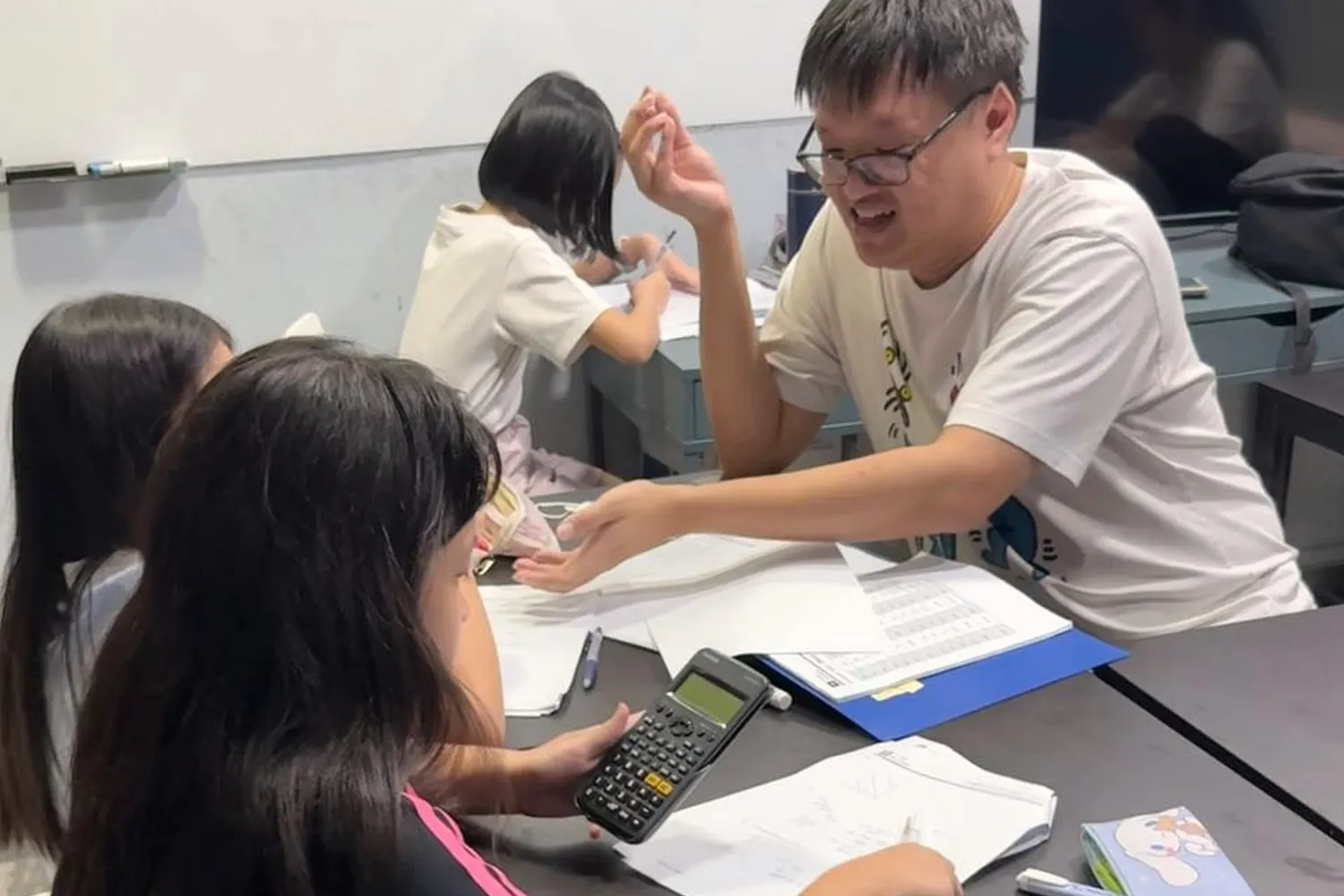
- PSLE problem sums reward reading the question properly. Students learn to pick out what is being asked, then try more than one way to solve the same problem. The teacher works through it with each student, not just at the board.
- Heuristics
- As problem sums get longer, students learn the standard heuristics and when each one fits. They break a problem into smaller parts, check their working, and learn the mistakes that cost marks most often.
- Reading data and patterns
- Some PSLE questions are about interpreting a table, a graph or a pattern rather than calculating. Students practise reading the data first and drawing a conclusion they can justify, and look for a second way to the same answer.
- Understanding comes first
- Following the MOE syllabus, students learn numbers and how the four operations work on them. Tutors check each student understands this before moving on, because every later year builds on it.
- Applying it accurately
- Once the concept holds, students practise it on questions across a range of difficulty, working for speed and accuracy.
Recent results
From our primary students: the grade each one earned and, where we have it, the grade they started from.
 Ethan LimAL1PSLEAdmiralty Primary
 Ming ZhangAL1AL6 → AL1 (Prelim)Greenwood Primary
 Junn QuanAL1AL3 → AL1Evergreen Primary
Guides for PSLE Math
- PSLE Score CalculatorAdd up the four Achievement Levels, see the Posting Group, and list secondary schools by last year's cut-off and distance from home.Open the calculator
- PSLE Math: How to Score AL1 (A Parent's 2026 Guide)A practical, no-nonsense guide for parents on what it really takes to score AL1 for PSLE Math, from timelines to heuristics to exam-day strategy.Read the guide
- 8 PSLE Math Heuristics Every P6 Student Should KnowThe core problem-solving strategies tested at PSLE, what each one is for, and how to recognise which to use on an unfamiliar question.Read the guide
- Common PSLE Math Mistakes That Cost Easy MarksThe recurring errors we see in PSLE Math papers, why they happen even to strong students, and the habits that prevent them.Read the guide
Frequently asked questions
Most families start in Primary 5, which gives two years to build problem-solving depth before the PSLE. Starting in Primary 6 still works — we run a quick diagnostic so we target the exact topics costing marks. Younger children are welcome too — P1 to P6 share the same primary classes, and a P1 to P3 child works on lower-primary material rather than PSLE papers. Our Lower Primary programme covers what that looks like.
Lower Primary programme →PSLE Mathematics is graded on Achievement Levels (AL1 to AL8), where AL1 is 90 marks and above. Because the top bands are narrow, problem sums and careless-mistake control often make the difference — which is exactly what our classes drill.
We teach a consistent visual approach — the model (bar) method — plus a toolkit of heuristics, so students recognise question types instead of guessing. Every concept is understood, not memorised, which is what holds up under PSLE's non-routine questions.
Yes. Our PSLE Math curriculum follows the latest MOE syllabus and is reinforced with in-house materials refined over 20+ years of teaching Singapore Math.
Within primary, yes — a P2 and a P5 may well be in the same room. It works because the teacher isn't delivering one lesson to the class: they move between students, and each child works on material matched to their own level. Primary and secondary classes are always separate.
Other Math programmes by exam
Try a PSLE Math class for $50
A full 2-hour lesson, the real class experience. We'll match the material to where your child is after a quick assessment.
Book a Trial Class